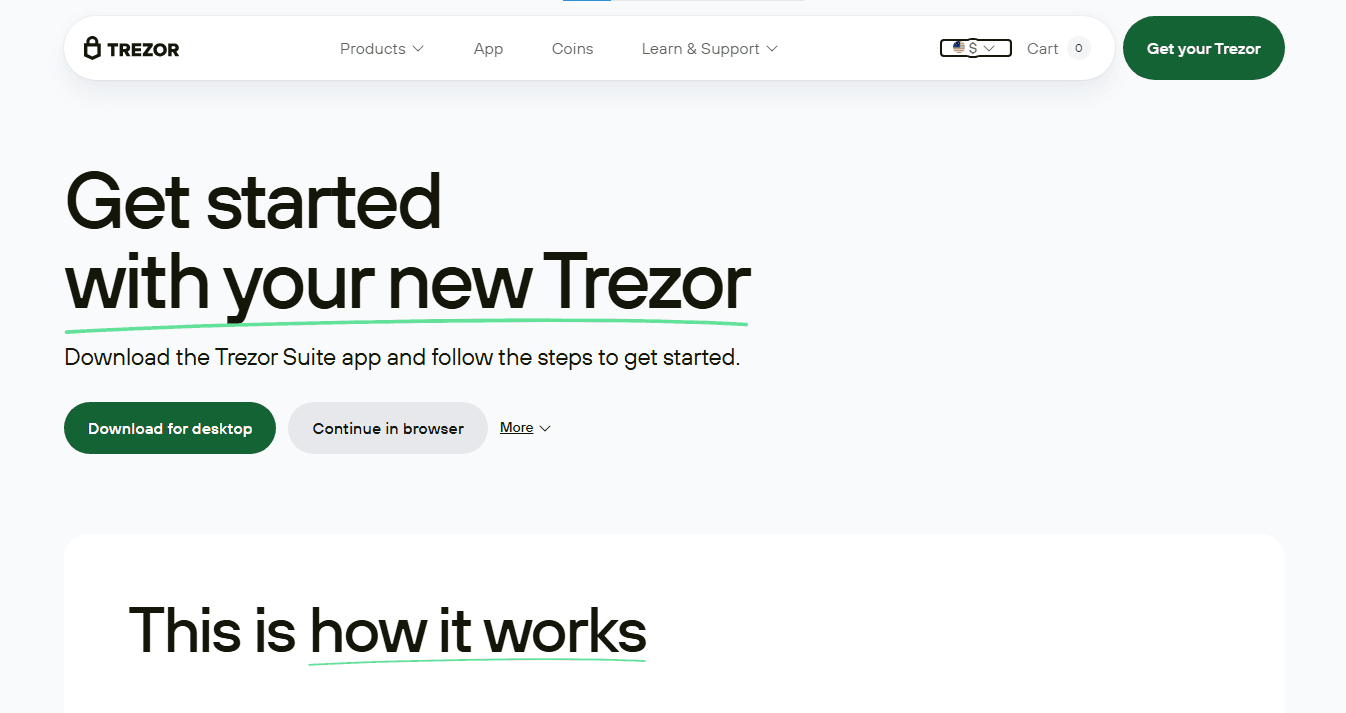
Trezor.io/start – A Beginner’s Guide to Hardware Wallet Awareness
Trezor.io/start is the official entry point for anyone looking to understand Trezor hardware wallets and how to manage digital assets safely. Unlike other guides that focus solely on setup instructions, Trezor.io/start is designed to help users build a clear understanding of the concepts behind hardware wallets, the responsibilities involved in self-custody, and the security practices necessary to protect digital assets.
By starting with education, Trezor.io/start encourages a thoughtful approach. It prioritizes understanding over speed, helping users avoid mistakes and approach digital security with confidence.
Why Digital Asset Security Requires a New Mindset
Digital assets differ from traditional accounts or banking systems. Ownership is defined not by an institution but by cryptographic access. If private credentials are lost or stolen, there is no external party that can recover them. This reality makes self-managed security crucial.
Trezor hardware wallets are designed to address this challenge. They provide a physical device that isolates private keys from online threats, helping users protect their assets. Trezor.io/start introduces these ideas in clear, straightforward language, making complex concepts accessible even to beginners.
The Role of Trezor.io/start
Trezor.io/start is not a step-by-step setup guide. Instead, it serves as an orientation, helping users understand what a hardware wallet does and what they should expect when managing digital assets independently.
The page is designed to:
Explain the purpose of a hardware wallet
Introduce private keys and their significance
Explain self-custody and personal responsibility
Highlight common security risks
Encourage cautious, informed decision-making
By focusing on these foundational concepts, Trezor.io/start prepares users to approach hardware wallet use safely and responsibly.
Private Keys: Understanding Control and Responsibility
Private keys are the core of digital ownership. They are the credentials that give access to your digital assets. Whoever controls the private key controls the assets themselves.
Trezor.io/start explains that private keys are stored securely on the hardware device and are never shared with third parties. Trezor itself cannot access your keys. This design provides full control to the user but also places full responsibility on their shoulders.
Users are guided to understand the critical nature of these keys and the importance of keeping them secure, making it clear that losing access information could result in permanent loss.
Self-Custody: Empowerment with Responsibility
Self-custody is a fundamental concept highlighted on Trezor.io/start. It means that users manage their digital assets directly rather than relying on centralized platforms to store them.
While self-custody offers independence and freedom, it also carries responsibilities. Users must take active steps to safeguard access information, manage backups, and be vigilant against fraud and scams.
Trezor.io/start frames self-custody as a conscious choice. Users are encouraged to weigh the benefits against the responsibilities and develop habits that make independent management feasible and secure.
Core Security Principles
Trezor.io/start introduces users to several essential security principles:
Offline Storage
Trezor hardware wallets keep private keys offline, reducing exposure to malware, phishing attacks, and other online threats.
Direct Confirmation
All critical operations require direct confirmation on the device, ensuring that actions cannot occur without user consent.
Recovery Awareness
The page emphasizes the importance of recovery information and proper storage. This is a crucial safeguard in case the device is lost or damaged.
Scam Prevention
Trezor.io/start alerts users to fake websites, phishing attempts, and impersonation schemes, encouraging users to verify sources and rely only on official information.
The Value of the Official Start Page
There is a wide range of content about hardware wallets online, but not all of it is reliable. Outdated guides or unofficial tutorials can create risks for users who are unfamiliar with secure practices.
Trezor.io/start provides a verified, official source of information. Starting here helps users reduce the risk of errors caused by misinformation and ensures that they are learning accurate, up-to-date principles.
The page also emphasizes the importance of taking time to understand security concepts, fostering a more deliberate and cautious approach.
How Trezor Fits into Daily Management
Trezor.io/start explains that hardware wallets are often used alongside official software tools. These tools allow users to view balances, manage supported features, and interact with digital networks without exposing private keys.
Even when using software interfaces, private keys remain protected on the device itself. This separation of control and visibility is a key security concept highlighted on the page, helping users understand the safety of the ecosystem.
Building a Security-First Mindset
Trezor.io/start stresses that security is not a one-time setup but an ongoing practice. Users are encouraged to develop consistent habits, such as:
Storing recovery information safely
Keeping sensitive data private
Following official updates and announcements
Verifying the legitimacy of messages and requests
Thinking critically before performing transactions
By making security an everyday practice, users can maintain long-term control and minimize risks.
Who Should Use Trezor.io/start
Trezor.io/start is useful for beginners who are learning about hardware wallets for the first time and for experienced users seeking reminders about best practices. Its focus on mindset, preparation, and awareness makes it a valuable starting point for anyone interested in self-custody.
The page is particularly helpful for individuals who value independence, wish to retain control over their assets, and want to understand the responsibilities that come with that control.
A Thoughtful Approach to Getting Started
In a fast-moving digital space, it can be tempting to rush setup and start transacting immediately. Trezor.io/start encourages a measured approach: pause, learn, and prepare. Understanding the principles behind hardware wallets before using one reduces mistakes and increases confidence.
This thoughtful approach helps users take ownership of both their digital assets and their security practices, building habits that will last long after initial setup.
Conclusion
Trezor.io/start is more than a starting page; it is a guide for understanding the principles of secure digital asset management. By emphasizing education, responsibility, and awareness, it helps users approach hardware wallets with clarity and confidence.
For anyone interested in self-custody and long-term digital asset security, Trezor.io/start offers a solid foundation. Taking the time to absorb the information presented can help users make informed decisions, adopt safe habits, and manage digital assets responsibly over time.